History of Heat
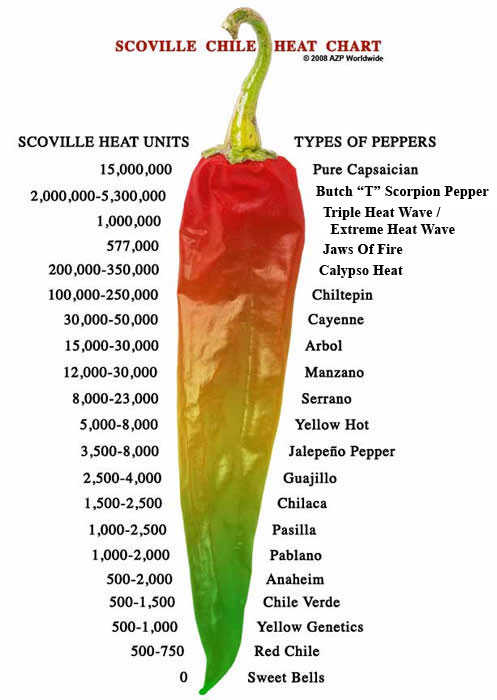 | Have you ever thought "how hot could it be?" according to Google the hottest pepper known to man is the Scorpion Pepper. Topping at a substantial 2 million scoville units, it will definitely make your eyes water and skin sweat. Not to mention the blistering heat coming off from your tongue. So what makes these peppers so hot? One word, Capsaicin.
Because of the burning sensation caused by capsaicin when it comes in contact with mucous membranes, it is commonly used in food products to give them added spice or "heat" (piquancy). In high concentrations, capsaicin will also cause a burning effect on other sensitive areas of skin. The degree of heat found within a food is often measured on the Scoville scale. In some cases people enjoy the heat; there has long been a demand for capsaicin-spiced food and beverages. There are many cuisines and food products featuring capsaicin such as hot sauce, salsa, and beverages. It is common for people to experience pleasurable and even euphoriant effects from ingesting capsaicin. Folklore among self-described "chili heads" attributes this to pain-stimulated release of endorphins, a different mechanism from the local receptor overload that makes capsaicin effective as a topical analgesic. In support of this theory, there is some evidence that the effect can be blocked by naloxone and other compounds that compete for receptor sites with endorphins and opiates. Capsaicin is currently used in topical ointments, as well as a high-dose dermal patch (trade name Qutenza), to relieve the pain of peripheral neuropathy such as post-herpetic neuralgia caused by shingles. It may be used in concentrations of between 0.025% and 0.15%. It may be used as a cream for the temporary relief of minor aches and pains of muscles and joints associated with arthritis, simple backache, strains and sprains, often in compounds with other rubefacients. The treatment typically involves the application of a topical anesthetic until the area is numb. Then the capsaicin is applied by a therapist wearing rubber gloves and a face mask. The capsaicin remains on the skin until the patient starts to feel the "heat", at which point it is promptly removed. Capsaicin is also available in large bandages (plasters) that can be applied to the back. |
